
Mexico’s Investment Pitch Has a Political Problem
Alejandro Garcia Magos (*)
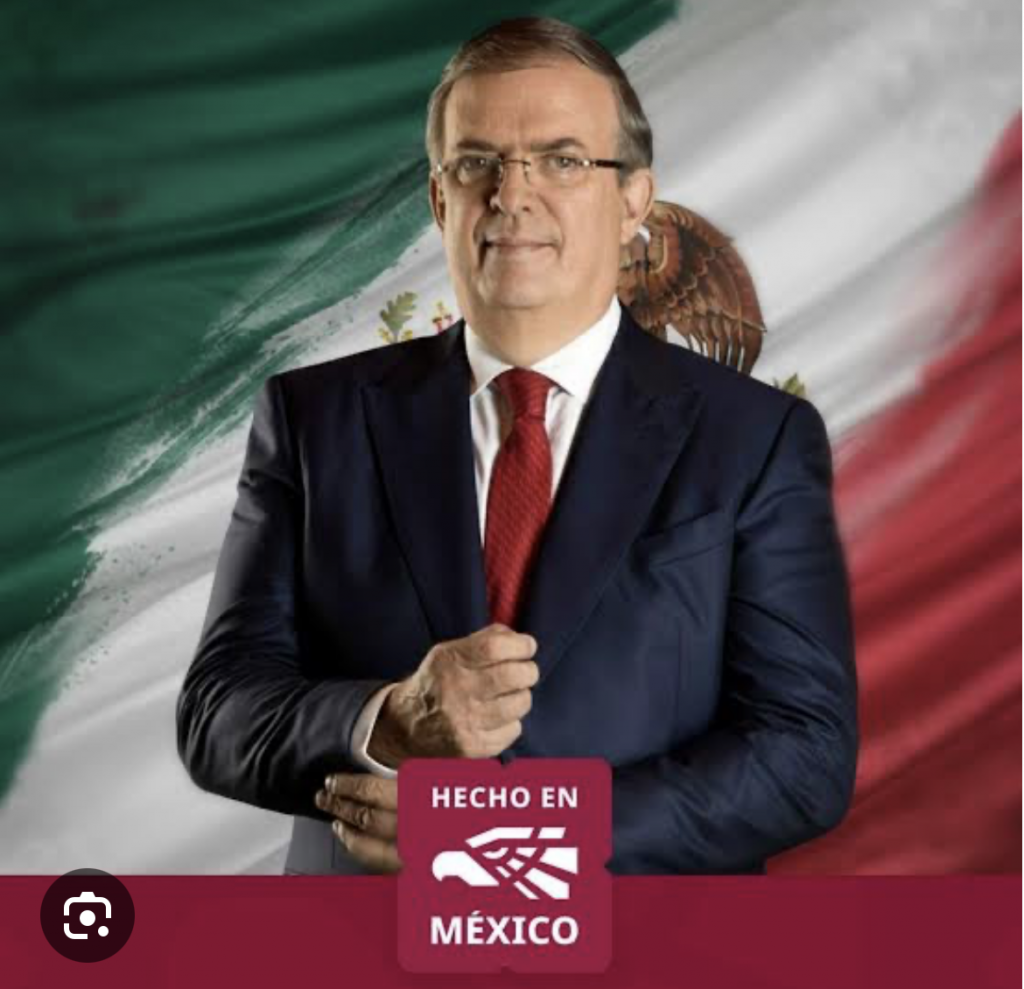
Toronto, 7 de mayo.–As Mexican officials arrive in Canada today, their message to Toronto’s business community will sound familiar: a siren song of Mexico as an open and reliable partner. The pitch will lean on the ual greatest hits: competitive labor costs, geographic proximity, and preferential accessthrough trade agreements. Add to that the charm offensive: warm smiles, great food, and margaritas served properly chilled. At first glance, a compelling case.
But there is another side to the story. One that will likely be brushed under the rug. It is a side that deserves careful attention from investors concerned with their bottom line and the security of their assets.
Since 2018, Mexico has undergone a series of institutional changes that have fundamentally reshaped its political regime and, with it, its business environment. Mexico is no longer a democracy in any meaningful sense; it is a hybrid regime with clear authoritarian traits. The shift is not cosmetic. The locus of power has moved outside formal institutions, and the rules governing political competition, access to office, economic activity, and dispute resolution are increasingly aligned with the interests of the ruling party—as reflected in recent disputes such as the arbitration claim filed by Canadian Pacific Kansas City (CPKC) alleging discriminatory treatment of its investments.
Recent reforms targeting the judiciary stand out as particularly consequential. Measures that weaken judicial independence or expand political influence over the courts raise serious questions about the impartial enforcement of contracts and the resolution of commercial disputes. For investors, this is not theoretical. Legal certainty is the backbone of long-term investment decisions, especially in sectors that require significant upfront capital.
Consider electoral institutions for example, long regarded as one of Mexico’s democratic success stories, and supported in part by Elections Canada during their development in the 1990s. They are now under increasing pressure from the government. Efforts to limit their autonomy risk consolidating a more centralized, hegemonic party system reminiscent of the 20th century. That trajectory introduces uncertainty not only about elections, but about the broader stability of the rules of the political game.
This should not come as a surprise. When institutions designed to provide checks and balances are weakened, policymaking becomes more centralized, dissent tends to spill outside institutional channels, and the overall environment grows more volatile.
For Canadian firms, many of which have longstanding operations or partnerships in Mexico, these developments do not necessarily signal an immediate exit. Mexico remains a critical player in North American manufacturing and trade. But they do suggest a need for greater caution and more rigorous risk assessment.
In practical terms, this means paying closer attention to the country’s political trajectory, securing legal protections where possible, and explicitly incorporating political risk into strategic planning. It also means recognizing that favorable structural trends, such as nearshoring and geographic proximity, do not fully offset governance-related risks.
The timing of this visit is therefore significant. As Mexican officials make their pitch, Canadian stakeholders should engage constructively, but also ask difficult questions. How will recent institutional reforms affect contract enforcement? What safeguards are in place to ensure regulatory stability? How does the government plan to maintain investor confidence amid ongoing political change?
And more pointedly: what explains Mexico’s decline across major democracy indexes? What is the professional trajectory of newly appointed Supreme Court justices? And what role does former president Andrés Manuel López Obrador continue to play in shaping the current administration? Is he still, as the saying goes, the hand that rocks the cradle? And to name the elephant in the room: what do recent U.S. federal indictments alleging ties between elected officials in Sinaloa—including Governor Rubén Rocha Moya—and the Sinaloa Cartel tell us about the broader rule-of-law environment in Mexico?
These are not confrontational questions; they are prudent ones. A strong economic partnership between Canada and Mexico depends not only on trade flows and investment volumes, but also on shared expectations around the rule of law and institutional reliability.
Ignoring the political dimension of Mexico’s current trajectory would be a mistake. Engagement should continue, but with eyes wide open. As an old Mexican saying goes: sins are paid for in the afterlife; mistakes, here and now, in cash.
(*) PhD University of Toronto